

“…About the 6th Hour…”: A Reflection on Time in Light of Eternity
Written by Jose Urbina
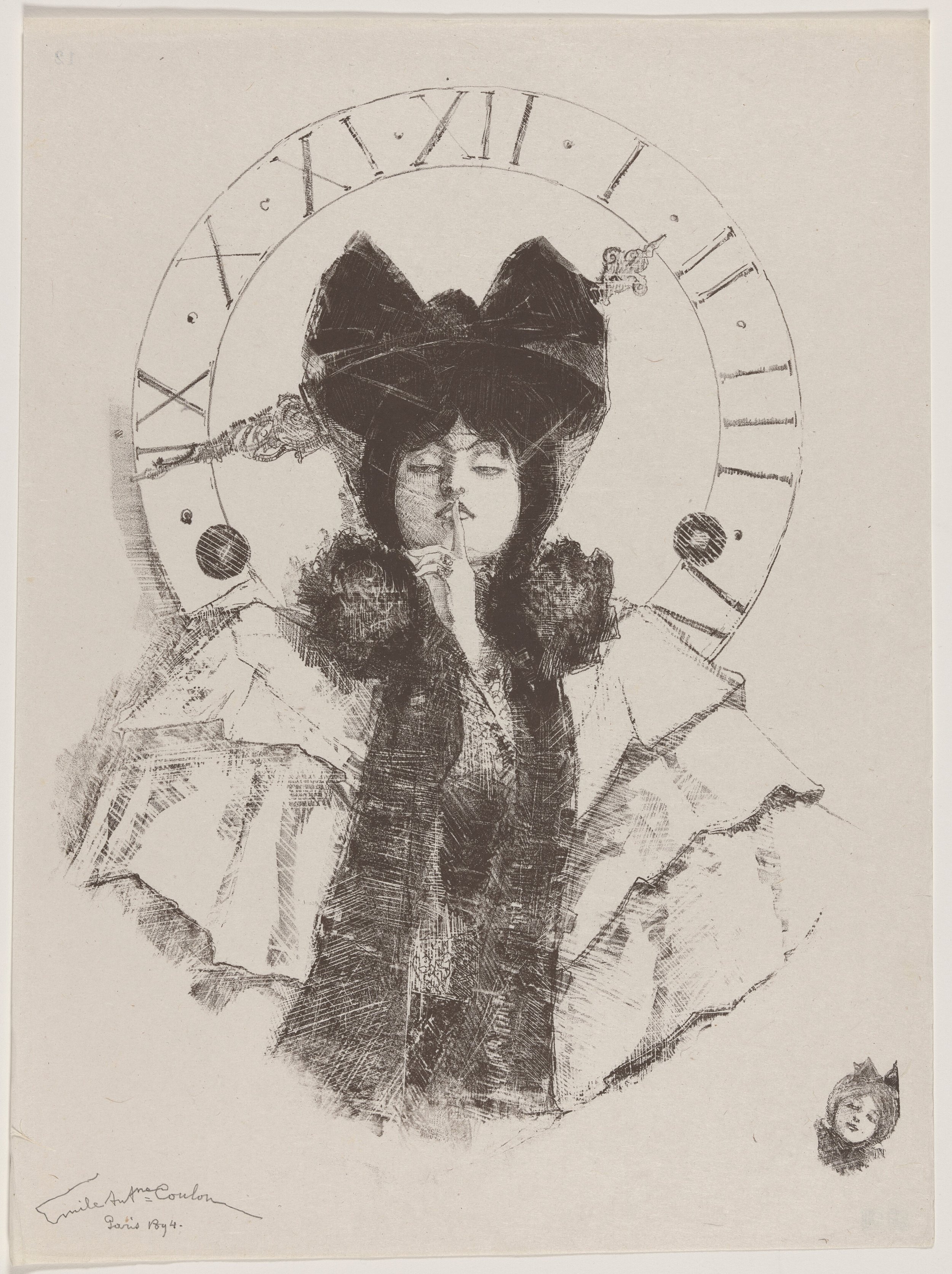
L'Heure (The Hour) 1894 by Emile Coulon
“Pray for my wife. She spends the entire day on the phone…” Personally, I’ve never heard anyone make such a request in any of the different ministries I’ve been involved in over the years. But it made me think, especially in light of my aging, and the passing of iconic American people in the sports and entertainment world, such as Chuck Norris, the celebrated action movie and TV actor, about my time here on Earth and how I should regard it in the light of eternity.
One of my prayer verses then is Ephesians 5:15,16:
“See then that you walk circumspectly, not as fools but as wise, redeeming the time, because the days are evil.”
That is, I am to regard time as valuable and do my best to use it properly as God intended.
The title of this piece, “…about the 6th hour…”, comes from John 4:6, and it leads to a divine appointment with the answer to all our questions and the satisfaction of all our needs. This is only in the person of Jesus Christ. It’s the story of the woman at the well, a marginalized soul who enters from time to eternity when it finally dawns on her that:
“Man shall not live by bread alone, but by every word that proceedeth out of the mouth of God.” (Matthew 4:4)
There is more to human experience than our lives here on Earth, and time is a very important part of those lives.
“Could the devil be saved?”
The inspiration for this piece came from a preacher asking, “Could the devil be saved?” The short answer is no.
The preacher explains from scripture that the devil is a creature of eternity, and therefore, his nature is fixed. In contrast, he then speaks of the prodigal son and notes the wonderful outcome of that young man repenting and returning to his father, where he is restored to a right relationship.
That experience can only happen in the realm of time because, again, in the realm of eternity, everything is fixed. However, we enter into eternity—whether as a sinner, or covered in the blood of Jesus—once we pass the threshold of death, there is no more repentance for us.
TIME IN LIGHT OF ETERNITY
The minister explains that as a creature of time, the prodigal—and all who trust in salvation through Jesus—benefit from the forgiveness of the Father.
The devil and all those who die in their sins cannot benefit from the blood of Jesus shed for fallen humanity on Calvary’s cross.
The takeaway is clear: while we are still in the realm of time, we can repent, turn to Jesus for our salvation, and live our lives like King David, who served his generation by the will of God.
Therefore, how we regard time—whether in light of God’s purposes for our lives, or as a mere convenience to be spent, wasted (or robbed by the relentless stratagems of the devil)—is of utmost importance in the light of eternity.
TIME IS IMPORTANT TO GOD
בְּרֵאשִׁית בָּרָא אֱלֹהִים אֵת הַשָּׁמַיִם וְאֵת הָאָרֶץ׃ . "bə·rê·šîṯ bā·rā ’ĕ·lō·hîm; ’êṯ haš·šā·ma·yim wə·’êṯ hā·’ā·reṣ."
This is Genesis 1:1. In the beginning (beresit) God created the heavens and the earth (NKJV). That time is important to God is seen in the first verse of the first book of the Bible.
That time is important to God, as seen in the very first verse of the Bible.
Don Stewart, a Bible commentator, summarizes the relationship between God and time:
“Time and space were part of God’s original creation. When the Lord created the universe, He created time. Thus, God existed before there was such a thing as time.
While the Bible acknowledges the existence of time, God is not bound or limited by it. In fact, we are told that He dwells in eternity, not time. Because He dwells in eternity, He sees both the beginning and the end.
Therefore, the God of the Bible is the eternal God who inhabits eternity but interacts with His creation in time.”
Now, the question is: if time matters to God, why do we have such a disregard for it? Why do we allow it to slip into the past with no real effort to make the best of it?
There’s an algorithm built into some activities—not necessarily evil—but wasteful (I must confess I am guilty of this…).
WHERE DO WE WASTE TIME
In an article by Brian Barton titled “Where Time Slips Away: The Biggest Time-Wasters in Our Daily Lives” (Feb 28, 2026), he identifies common patterns:
Procrastination — 30%
Social Media — 25%
Meetings — 20%
Email — 15%
Other — 10%
Social media, in particular, has become a digital black hole. Endless scrolling, driven by algorithms, keeps us engaged with a constant stream of personalized content.
These platforms are engineered to exploit psychological vulnerabilities through variable reinforcement—likes, comments, and shares arriving unpredictably—creating a cycle of compulsive checking and scrolling.
Here is the key point:
-If time is important to God, you can bet your bottom dollar it is an important target to the devil.
-He will keep us “busy” and occupied while we miss the presence of God and rot in our ignorance of His divine purposes for our lives.
A CREATURE OF TIME (John 4:6–42)
A woman of Samaria came to draw water. Jesus said to her, “Give Me a drink.” Please note the time of day: the 6th hour—about noon. Normally, women gathered water early in the morning or later in the evening. Not at noon. This was not just a chore—it was a social activity. Women went together. Yet this woman came alone, in the heat of the day.
Why?
Isolation
Avoidance of judgment
Social stigma
She arranged her life around avoiding others. Her time reflected her condition.
TIME MEETS ETERNITY
Jesus “breaks the ice” with a simple request, and the conversation unfolds—about water, husbands, and the Messiah. Water is essential to life, yet she only understood her immediate need. Her focus was survival, routine, and relief from thirst. However, Jesus introduces something greater— living water.
She begins to see Him differently—no longer just a Jew, but “Sir.”
Then comes the turning point:
“Go, call your husband.”
Her life is exposed—five husbands, and her current situation. This is how she had spent her time. Yet Jesus does not reject her. Instead, He reveals her deeper need. The conversation shifts to worship—not location, not ritual, but truth and spirit.
As commentator David Guzik explains:
To worship in spirit is to focus on spiritual realities, not outward forms.
To worship in truth is to align with the full counsel of God’s Word and come without pretense.
Then comes the revelation:
“I who speak to you am He.”
The Messiah stands before her.
Time has met eternity.
THE RESULT
The impact is profound: “Many of the Samaritans of that city believed on Him for the saying of the woman…” (John 4:39)
Jesus declares, “Lift up your eyes… the fields are white for harvest.”There is urgency. The time is now!
Next time you pick up the phone—that piece of technology that has profoundly shaped modern society—consider this:
We all have 24 hours in a day.
8 hours to sleep
8 hours to work
8 hours remaining
Where and how we spend those hours reveals whether we are drinking tap water… or living water.
Mordecai’s words to Esther echo still:
“For if you remain silent at this time… who knows whether you have come to the kingdom for such a time as this?” (Esther 4:14)
Time is important to God. It should be important to all of us.
I bet the Samaritan woman regarded time in a completely different way after her encounter with the Lord of eternity—Jesus Christ.