

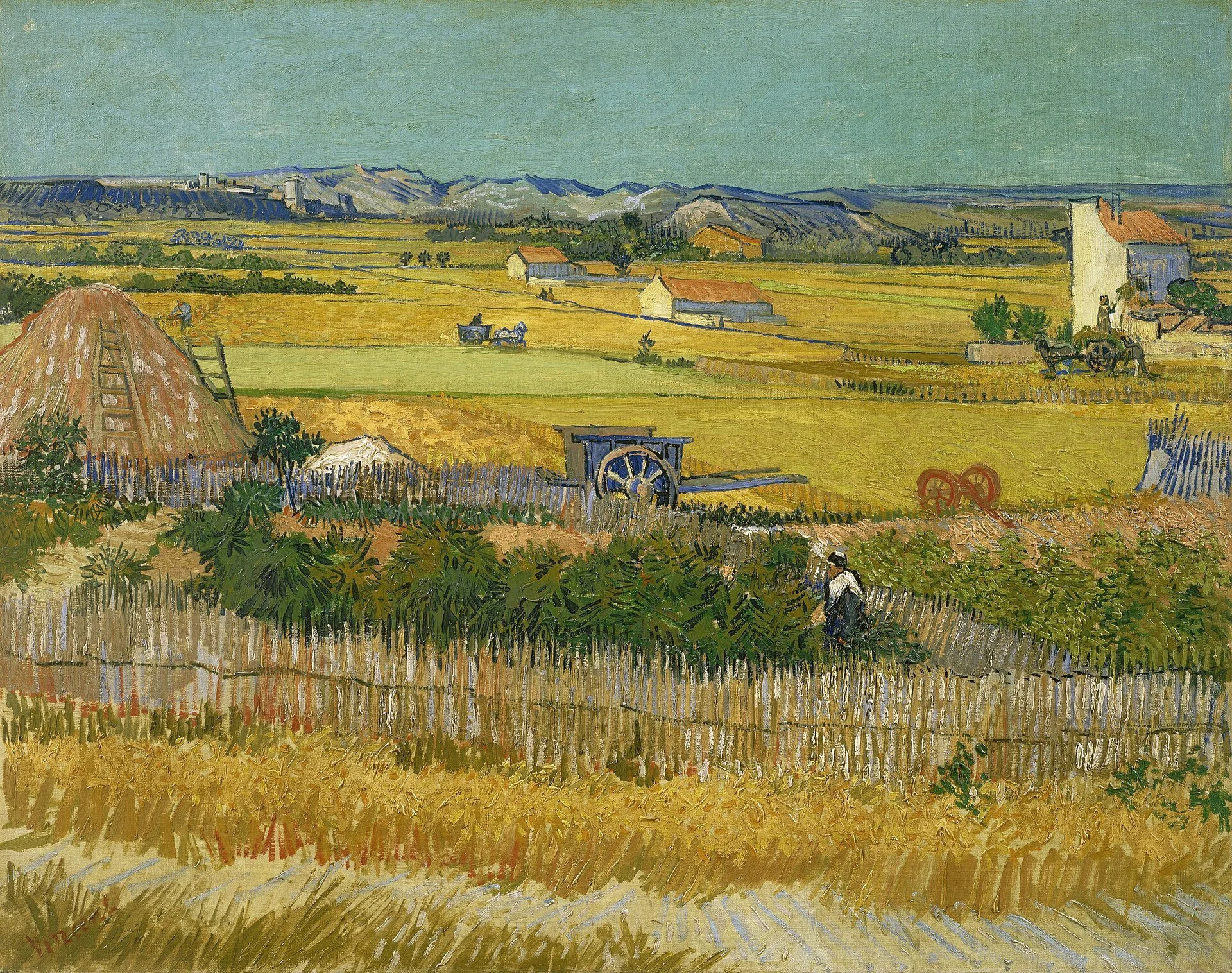
The Harvest, 1888 Vincent van Gough
Mike Rowe is an interesting writer who has carved out a niche for himself observing and commenting on the American working class. Recently, he discussed the phenomenon of the “NILF”, an acronym for “Not in Labor Force.”
Mr. Rowe was referring to about 7-9 million mostly young, able-bodied, prime-aged American men who are not in the labor force and are not looking for work. An excerpt from the article states:
Mike Rowe highlights that over 7 million able-bodied prime-age American men are "NILFs"—not in the labor force and not looking for work. He calls this a crisis of both a "skill gap" and a "will gap," pointing to millions of unfilled, high-paying trade jobs while arguing that cultural shifts and diminished motivation keep men on the sidelines
Rowe lists some reasons for the phenomenon:
The "Will Gap": Rowe argues the issue goes beyond a lack of training; it reflects a cultural erosion of the fundamental desire and personal drive to work.
Societal Shifts: He points to a mix of changing societal expectations, reliance on safety nets, and modern distractions (like readily accessible digital entertainment) that reduce the traditional drive to build a career or support a family.
An age-old argument in the church is in interpreting the pronounced curse in Genesis 3: 17-19 over Adam:
“Cursed is the ground for your sake;
In toil you shall eat of it
All the days of your life.
18 Both thorns and thistles it shall [f]bring forth for you,
And you shall eat the herb of the field.
19 In the sweat of your face you shall eat bread
Till you return to the ground,
For out of it you were taken;
For dust you are,
And to dust you shall return.”
That certainly could be interpreted as work being difficult,
toilsome and wearying. Anyone who has spent their adult life in
the workforce has their share of those moments. Adam’s curse, though, like all Scripture, must be interpreted in context and biblical theme.
Even a cursory glance at the Creation story, we realize that Adam and Eve were not idle in Eden, but were commissioned to be caretakers in paradise.
Genesis 2:15:
15Then the Lord God took the man and put him in the garden of Eden to tend and keep it.
Tend, the Hebrew word , abad, which means to work in any capacity, to serve, to cultivate, to work the soil, to dress, to be a husbandman.
All of these interpretations imply labor. We are fortunate living in Kentucky to be able to grow abundant fruits, vegetables, and flowers. Wouldn’t it be nice if it was all automatic? You went out one day, and a garden magically appeared, but in reality, our cornucopia of produce in the fall is the result of Alison spending countless hours preparing, mulching the soil, weeding, etc.
Without making an exhaustive survey of Biblical exhortations to work, we can all reference the various warnings in Proverbs against sloth, the New Testament last days warning from Paul in 2 Thess 3:10,
10 For even when we were with you, we commanded you this: If anyone will not work, neither shall he eat.
Understandably, there are disabilities and aging and other hindrances to work, but living as a healthy human being requires living a productive life. Being a pastor or in another church office is described in the New Testament as “the work of the ministry”. Jesus Himself stated, “I work, and my Father works”.
Without wishing to be controversial, at the extremes of some of the most destructive ideologies in our culture is a coterie of highly educated women who, in their quest for achievement, have forsaken hearth, home, and motherhood. While that is certainly their choice, perhaps they have missed the glory and dignity of the Proverbs 31 “virtuous woman” by trivializing home and marriage.
A portion of that lovely passage, verses 13-18, paints a portrait of dignity and purpose:
She seeks wool and flax,
And willingly works with her hands.
14 She is like the merchant ships,
She brings her food from afar.
15 She also rises while it is yet night,
And provides food for her household,
And a portion for her maidservants.
16 She considers a field and buys it;
From her profits she plants a vineyard.
17 She girds herself with strength,
And strengthens her arms.
Mike Rowe suggests young men learning skilled trades as a pathway to long-term meaningful employment. He also suggests that, as a society, we need to re-evaluate the push over the last few decades to demean blue-collar work in favor of the ideas of the technocrats and managerial class.
Psychiatrist Abraham Maslow created a hierarchy of human needs, including basic needs, safety, healthy relationships, and self-esteem. At the very top, he identified man’s greatest need to be what he called self-actualization.
Self-actualization involves finding meaning and purpose for our lives. This includes and encompasses that magic 4 letter word “work”. A key part of a life well lived is finding meaningful activity to give ourselves to.
I am returning to part-time work this week after being off for 2 months on medical leave. God has blessed us so that I don’t need to work, but the interaction with clients at my job offers the Holy Spirit an opportunity to touch lives, and I won’t pass that up.